
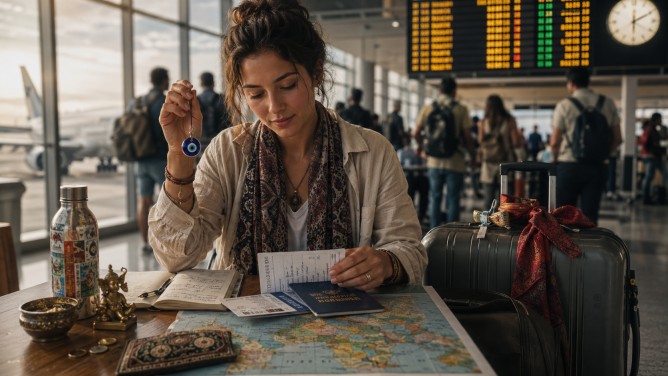
Travel is a realm filled with exciting customs and age-old rituals that infuse journeys with a sense of wonder and safety. Across the globe, various superstitions have emerged, aiming to attract good luck and ensure a secure voyage. These fascinating beliefs, rooted in different cultures, continue to captivate the minds of travellers today.
One such practice involves carrying a clove of garlic, particularly in the Balkans, where it’s believed to ward off negative energy and the evil eye. Travellers often tuck a clove into their luggage, convinced it will shield them from misfortune during their travels. Meanwhile, a more modern ritual involves touching or tapping the outside of an aircraft before boarding. This gesture, cherished by some, is seen as a harbinger of good luck and offers comfort to those anxious about flying.
The notion of “starting on the right foot” takes a literal form for some passengers who step onto a plane with their right foot first, believing it invites good fortune. Another intriguing custom involves throwing water behind a departing traveller, a tradition in parts of the Middle East and the Balkans. This act symbolizes a smooth and safe journey, with hopes for a safe return.
Numbers also play a significant role in travel superstitions. The number 13 is avoided in many Western cultures, while in China, the number 4 is often shunned due to its phonetic similarity to the word for death. In Italy, 17 is another number viewed with caution. Such beliefs sometimes influence decisions regarding hotel room numbers or building floors. Additionally, a Slavic tradition involves sitting on packed luggage briefly before embarking on a trip, offering travellers a moment to gather their thoughts and prepare mentally.
Finally, in several cultures, sweeping the floor immediately after someone leaves is avoided, as it’s believed to sweep away the traveller’s good fortune or impede their safe return. While these superstitions lack scientific grounding, they remain a charming aspect of travel culture. For many, these rituals are less about their efficacy and more about celebrating family traditions, cultural heritage, and the joy of embarking on a new adventure.