
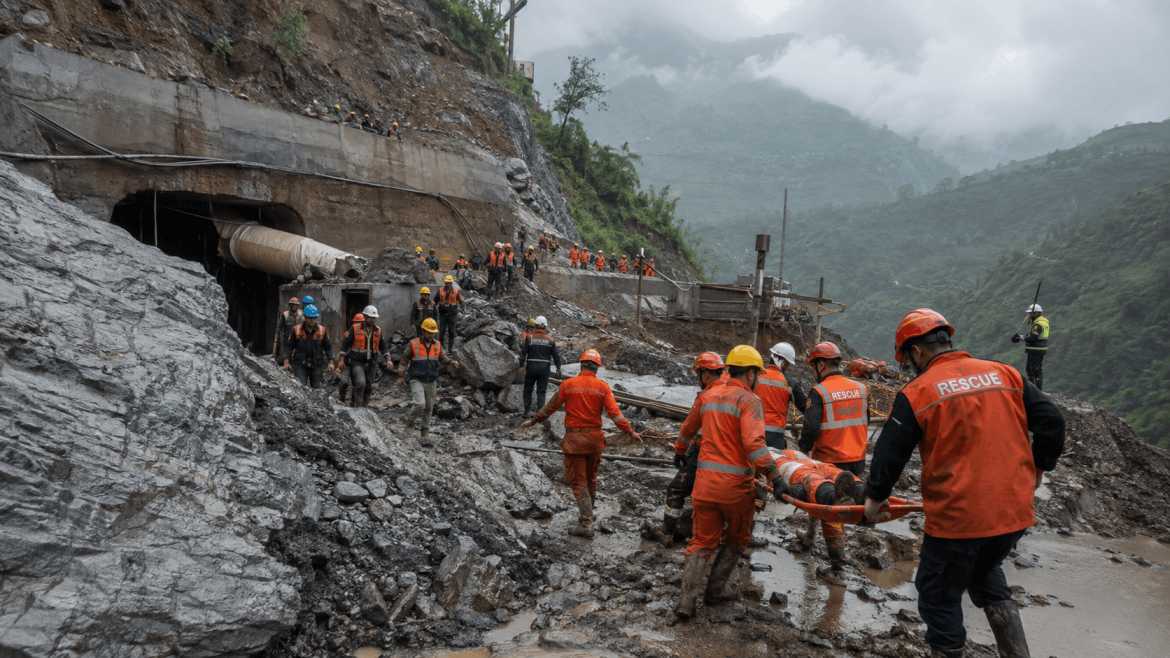
In the wake of devastating flash floods, over 900 hydropower workers are feared trapped in underground tunnels at various sites in Nepal, with rescue teams racing against time to reach them. The disaster has resulted in a death toll nearing 940 within Nepal, with additional casualties reported in Tibet, and thousands still unaccounted for in both regions. Particularly hard-hit are the Rasuwa and Nuwakot districts, where around 500 workers are believed to be stuck in tunnels at hydropower projects.
The rescue operations face significant challenges due to destroyed infrastructure, including bridges, and unpredictable river conditions that complicate access to the affected areas. Helicopters are heavily utilized as rescuers struggle to clear debris-blocked tunnels, sometimes resorting to blasting in an attempt to reach those trapped. The situation is further complicated by the decreasing oxygen levels within the tunnels, which experts say lessen the chances of finding survivors. Despite these dire circumstances, there remains a glimmer of hope that some workers may have reached safe zones within the tunnels.
The floods have devastated tens of thousands of lives, obliterating entire communities and raising concerns about the impacts of climate change on glacial and mountainous regions. Nepal’s government has characterized the situation as an unprecedented natural disaster, prompting a large-scale response involving tens of thousands of security personnel and volunteers. International aid has been swift, with neighboring countries providing rescue teams, funding, and technical assistance to bolster the efforts on the ground.
Rescue teams have described the perilous conditions inside the tunnels, where mud can reach chest height and visibility is severely reduced. Still, the determination of rescuers is underscored by moments of success, such as the rescue of a young child found alive in the mud. This ongoing crisis has also highlighted gaps in information-sharing regarding glacier and water-level data between countries, which officials fear could impede future disaster preparedness and response initiatives.