
A new US-drafted Gaza peace plan passed the UN Security Council on Monday, but it faces the extraordinary challenge of being partially opposed by its key subjects: both the Israeli government and the militant group Hamas. The resolution, endorsing President Donald Trump’s 20-point plan, authorizes an international force to demilitarize Gaza and a “Board of Peace” to govern. However, Israel’s prime minister rejects its political vision, while Hamas rejects its security mandate.
For Hamas, the plan is a non-starter. The resolution’s core security component is an “international stabilization force” (ISF) tasked with the complete demilitarization of Gaza. Hamas, which rules the enclave, issued a statement flatly rejecting this, calling the plan “international guardianship” and vowing it “will not disarm.” This positions the group for a direct conflict with the new force.
For Israel’s government, the problem lies in the resolution’s diplomatic language. The text references a “credible pathway to Palestinian self-determination and statehood” as a future possibility. This clause has prompted Prime Minister Benjamin Netanyahu, under pressure from his right-wing coalition, to publicly state his opposition to a Palestinian state, putting him at odds with the stated long-term goal of his main ally, the United States.
The US, however, celebrated the vote. Ambassador Mike Waltz called it a “pathway” that “dismantles Hamas’ grip,” and President Trump, who will chair the Board of Peace, called it “historic.” The resolution passed because Russia and China abstained, rather than using their veto. Both countries criticized the plan for sidelining the UN and giving “complete control” to the US initiative.
The plan has one crucial supporter in the region: the Palestinian Authority. The PA’s endorsement of the resolution was seen by diplomats as the key to preventing a Russian veto. The PA’s acceptance, likely based on the very “statehood” clause Netanyahu rejects, highlights the profound divisions and competing interests that threaten to tear the new plan apart before it even begins.
Gaza Plan Passes UN, But Netanyahu and Hamas Both Oppose Key Parts
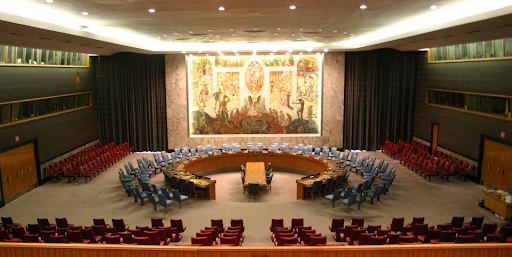
Picture credit: www.commons.wikimedia.org
41