
The vitality of Cornwall’s winter solstice traditions demonstrates how prehistoric heritage can remain relevant and meaningful across millennia. Rather than existing as museum pieces or archaeological curiosities, monuments like Tregeseal circle and Chûn Quoit continue serving their original purposes—marking astronomical events and providing focal points for community gatherings during the year’s shortest day.
This continuity results from multiple factors. The monuments’ astronomical alignments remain functional, allowing contemporary observers to witness solar phenomena exactly as their ancestors did. Archaeological research provides scholarly understanding of prehistoric contexts and meanings. Artistic practices including film and photography document how these ancient stones persist through seasonal changes, creating meditative reflections on time and continuity.
Community celebrations represent perhaps the most vital aspect of this living heritage. The Montol festival, though established only in 2007, revives Cornish customs with roots extending centuries into the past. Guise dancing with elaborate masks, traditional music on pipe and drum, ritual sun burning, and torch-lit processions maintain practices that acknowledge seasonal rhythms and mark the winter solstice as a critical turning point.
These modern celebrations blend seamlessly with engagement with prehistoric monuments. Throughout winter solstice day, people visit stone circles, burial chambers, and other megalithic sites to witness astronomical alignments. Carolyn Kennett leads guided walks to locations like Chûn Quoit where participants can see the sun setting over Carn Kenidjack while learning about Neolithic astronomical knowledge and cosmological beliefs.
The convergence of ancient monuments, scholarly research, artistic documentation, and vibrant community celebration creates uniquely powerful contexts for experiencing winter solstice in Cornwall. This isn’t heritage preserved in amber but living tradition that adapts and evolves while maintaining connections to prehistoric foundations. The result demonstrates how ancient practices can remain meaningful in contemporary life, providing shared rituals that acknowledge fundamental human relationships with seasonal cycles and cosmic patterns that continue structuring existence regardless of technological changes.
Ancient Stones, Modern Celebrations: Winter Solstice Lives On
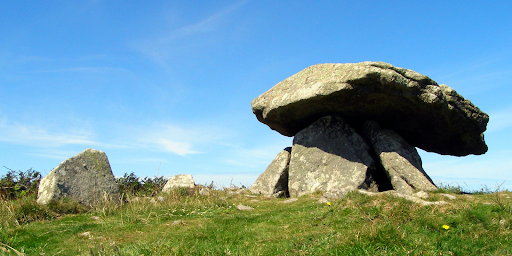
Photo by Jim Champion (treehouse1977), via wikimedia common
17
previous post