
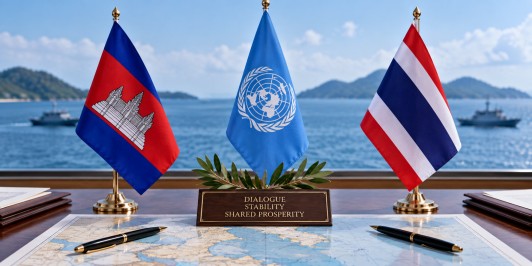
Cambodia and Thailand have embarked on a UN-supported conciliation process to address their protracted maritime boundary dispute in the Gulf of Thailand. This initiative, conducted under the auspices of the United Nations Convention on the Law of the Sea (UNCLOS), saw the foreign ministers from both nations delivering opening statements at the process’s inaugural meeting. The goal for Cambodia is to secure an agreement on a singular maritime boundary with Thailand; however, Phnom Penh has also suggested a joint development arrangement to enable resource sharing in the contested area.
Thailand, on the other hand, has emphasized that the proceedings should concentrate solely on demarcating the maritime boundary. The Thai government has affirmed its commitment to participate in the process with sincerity. Previously, Bangkok had advocated for settling the dispute through direct negotiations between the two countries.
For over 25 years, the two nations have been at odds over approximately 26,000 square kilometers of maritime territory. This area is believed to hold substantial reserves of natural gas and oil, making the resolution of the dispute economically significant. A framework for the joint development of these contested resources was established in a 2001 agreement, but the arrangement was terminated by Thailand in May, following escalating tensions tied to deadly border skirmishes between the countries.
Cambodia took the step to initiate the compulsory UNCLOS conciliation process in June. While the independent panel involved can provide recommendations, it is important to note that their findings are not legally binding on either Cambodia or Thailand.