
Vietnam is setting its sights on becoming a formidable player in the global economy, with the recent resolutions from the Politburo marking a shift from having a large number of enterprises to fostering corporations that can compete regionally and internationally. Resolution No. 68-NQ/TW, issued in May last year, outlines an ambitious goal to have 2 million active enterprises by 2030, including at least 20 large corporations participating in global value chains. Complementing this, Resolution No. 79-NQ/TW from January targets the development of 50 state-owned enterprises ranking among Southeast Asia’s top 500 companies, and one to three among the world’s top 500 by the same year.
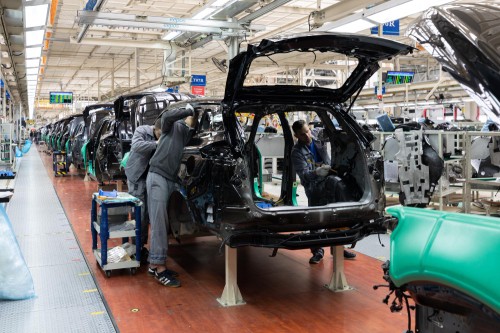
This vision aims to create strong state-owned economic groups with modern technology and international competitiveness, leading domestic firms into deeper global supply chain participation, especially in strategic industries. Over the past four decades since the Đổi mới policy began in 1986, Vietnam has seen major economic groups emerge, such as THACO in manufacturing with its large-scale automobile production in Quảng Nam Province, and VinFast, which has become Vietnam’s first electric vehicle manufacturer with a significant presence in international markets including North America and Europe.
Other notable enterprises include Hòa Phát Group in steel manufacturing and FPT in technology, both of which have expanded significantly in their respective fields, while Vinamilk and Masan Group have established strong consumer goods brands. Vingroup and Sun Group have also made substantial investments in infrastructure and real estate, contributing to the nation’s economic transformation. Despite these successes, experts like Đậu Anh Tuấn from the Vietnam Chamber of Commerce and Industry acknowledge that while the business sector has broad scale, it lacks depth and capacity.
To become a modern industrialised country by 2045, Vietnam needs stronger economic groups focusing on industrial sectors, as noted by economist Trần Đình Thiên. He stresses the importance of mastering technology and adopting a strategic approach to selecting priority industries. Drawing lessons from international examples such as Japan, South Korea, and China, where strategic industry selection and investment led to economic breakthroughs, Vietnam’s path forward involves nurturing enterprises that can sustain economic fluctuations and drive growth.
Resolutions 68 and 79 provide a synchronised policy framework for enterprise growth, but implementation and consistency in development strategy remain crucial. As opportunities arise and foundations are laid, Vietnam could see the emergence of economic groups with regional influence, gradually securing their position in global industrial value chains, and ultimately realising the country’s ambition to rise strongly on the global stage.