
Donald Trump executed a significant policy reversal at the World Economic Forum, postponing threatened tariffs against eight European countries while claiming diplomatic progress on Greenland. The US president’s announcements appeared strategically designed to demonstrate success in his territorial ambitions while avoiding immediate economic confrontation, though the lack of confirmation from NATO, Denmark, or Greenland raised doubts about substantive achievements.
The president’s arguments for acquiring Greenland continued to center on national security imperatives in the Arctic region. Trump emphasized the island’s strategic position between major powers and insisted that current arrangements under Danish sovereignty cannot adequately protect American interests. His proposed Golden Dome missile defense system would allegedly require American ownership rather than cooperative agreements, which Trump characterized as insufficient for defending territory held through leases.
European officials responded to Trump’s framework agreement claims with caution and uncertainty. NATO Secretary General Rutte declined to comment when asked about the purported preliminary deal, while Denmark’s foreign minister stressed the importance of respecting Greenlandic people without confirming Copenhagen’s involvement in discussions. The measured reactions illustrated European skepticism about whether Trump’s announced breakthrough represents genuine diplomatic progress or rhetorical positioning.
Trump’s tariff postponement affected Denmark, Norway, Sweden, France, Germany, the UK, the Netherlands, and Finland, all of which had been threatened with 10% duties starting February 1st. The president attributed this reversal to productive negotiations yielding a framework he characterized as getting “everything we wanted,” though he provided no specifics about terms, commitments, or implementation timelines. His promise of more details “down the line” suggested the supposed agreement may be less concrete than presented.
Beyond Greenland, Trump’s Davos address featured attacks on European energy policies, immigration practices, and defense spending while promoting American nationalism. He criticized renewable energy as a “green scam,” defended fossil fuels, questioned whether NATO allies would defend America, and deployed rhetoric about Western civilization that unsettled attendees. The 80-minute speech drew criticism from Democratic officials who dismissed it as insignificant and concern from some Republicans troubled by Trump’s approach to indigenous Greenlanders.
Trump Reverses European Tariff Plans After Announcing Greenland Framework
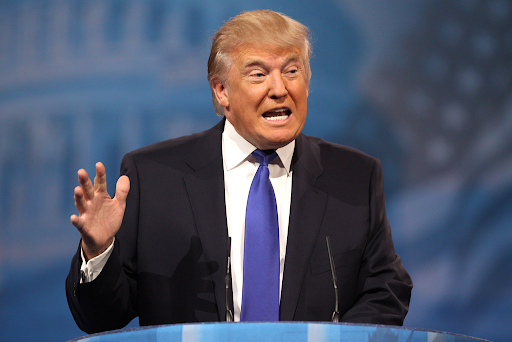
Picture Credit: www.flickr.com
57